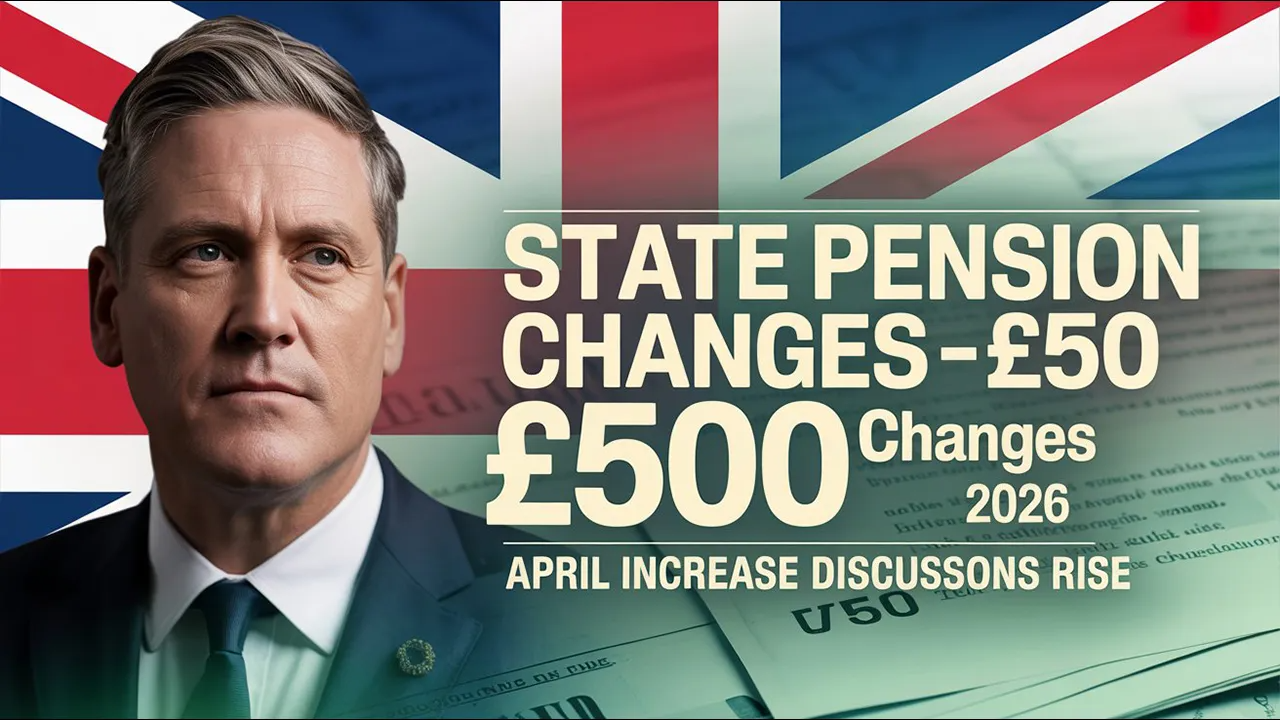
As April 2026 approaches, conversations around the UK State Pension are gaining real momentum. Many people are asking the same question: could the next annual update bring a noticeable boost to weekly payments?
Recent discussions suggest a possible £500–£650 yearly increase, and while nothing is officially confirmed yet, the growing attention reflects how important these changes are for everyday budgeting.
Why Everyone Is Talking About the 2026 Pension Increase
Interest in pension updates tends to rise every year, but 2026 feels different. More people are actively tracking inflation, wage growth, and policy signals to estimate what might happen next.
Key Factors Driving Attention
- Rising cost of living across the UK
- Ongoing inflation trends
- Wage growth data influencing pension formulas
- Increased awareness through online financial discussions
These factors are closely tied to the system used to adjust pensions annually, commonly known as the Triple Lock.
How the Triple Lock Shapes Pension Increases
The Triple Lock guarantees that pensions rise each year based on the highest of three measures:
| Factor | What It Means |
|---|---|
| Inflation | Based on rising prices |
| Earnings Growth | Average wage increases |
| Minimum Guarantee | At least 2.5% rise |
This mechanism ensures pensioners maintain purchasing power, especially during economic uncertainty.
What This Means for 2026
If current economic trends continue, estimates suggest a moderate increase. That’s where the £500–£650 annual figure comes into discussion—not as a confirmed number, but as a projection based on recent patterns.
Breaking Down the £500–£650 Estimate
The widely discussed range comes from applying expected percentage increases to current pension rates.
Example Impact on Weekly Payments
| Scenario | Approx Weekly Increase | Annual Impact |
|---|---|---|
| Lower Estimate | £9–£10 | ~£500/year |
| Higher Estimate | £12–£13 | ~£650/year |
While these numbers may seem modest weekly, they can make a noticeable difference over the year.
Why This Year Feels Different
There’s a noticeable shift in how early and actively people are discussing pension changes.
What’s Changed in 2026 Conversations
- Earlier tracking of economic indicators
- More detailed comparisons with previous years
- Increased reliance on digital platforms for financial insights
People are not just waiting for announcements—they’re actively analyzing trends and forming expectations.
What Pensioners Should Keep in Mind
Even if the projected increase happens, the real-world impact varies depending on personal circumstances.
Key Takeaways
- Increases are applied weekly, not as a lump sum
- Actual benefits depend on individual pension eligibility
- Inflation may offset some of the gains
- Official figures are typically confirmed closer to April
Staying informed is crucial, especially as updates approach.
Broader Context: Long-Term Pension Trends
Looking beyond 2026, pension adjustments are part of a larger financial picture.
Why Tracking Trends Matters
- Helps with retirement planning
- Provides clarity on income stability
- Offers insight into economic conditions
Rather than focusing only on one year, understanding long-term patterns gives a clearer financial outlook.
FAQs
1. When will the 2026 State Pension increase be confirmed?
Official figures are usually announced closer to April, before the new rates take effect.
2. Is the £500–£650 increase guaranteed?
No, this is an estimate based on current discussions and projections, not a confirmed figure.
3. How is the State Pension increase calculated?
It follows the Triple Lock system, based on inflation, wage growth, or a minimum 2.5% increase.
4. Will everyone receive the same increase?
Not necessarily. The exact amount depends on individual pension entitlements.
5. How will the increase be paid?
The increase is spread across weekly payments rather than given as a yearly lump sum.
Conclusion
The growing buzz around the UK State Pension update for April 2026 highlights just how important these annual changes are. While the £500–£650 increase remains an estimate, it reflects realistic expectations based on current economic trends.
For many, even a modest rise can make a meaningful difference in managing daily expenses. As the official announcement gets closer, staying updated and understanding how these changes work can help you plan more confidently for the year ahead.